

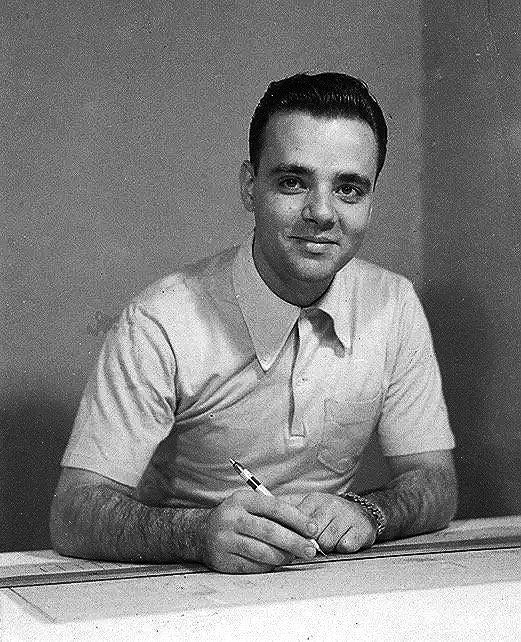
Sergio Rodrigues
Sergio Rodrigues is widely credited as the father of modern Brazilian furniture design. Trained as an architect in Rio de Janeiro, he founded Oca in 1955 — a shop, studio and gallery on Ipanema's Praça General Osório that he called "a laboratory for Brazilian furniture and handicrafts" — and spent the next six decades building a design language rooted specifically in Brazilian materials and Brazilian life, rather than importing European modernism wholesale.
That language found its clearest expression in 1957, when the photographer Otto Stupakoff asked Rodrigues for a chair with "rest appeal" for his studio. The result — a low, wide armchair with a solid jacaranda frame, leather-strap understructure and deep, overstuffed cushions — became known as the Mole ("soft") armchair. It sat largely unnoticed in the Oca showroom window until 1961, when it won top prize at the IV Concorso Internazionale del Mobile in Cantù, Italy, where Arne Jacobsen singled it out for capturing something unmistakably Brazilian: the gaucho-leather strapping, the low-slung, hammock-like ease of it, the sheer physical relaxation the design demanded of the sitter.
Rodrigues went on to design more than 1,200 pieces over his career — output on the scale of contemporaries like Hans Wegner — consistently returning to native hardwoods (jacaranda, peroba, imbuia) and leather. He also worked closely with Oscar Niemeyer as his interior designer of choice for Brasília, furnishing buildings including the National Theatre and the University of Brasília. He continued designing into his eighties, and died in Rio de Janeiro in 2014, shortly after a year of events marking his sixtieth year in furniture design.