

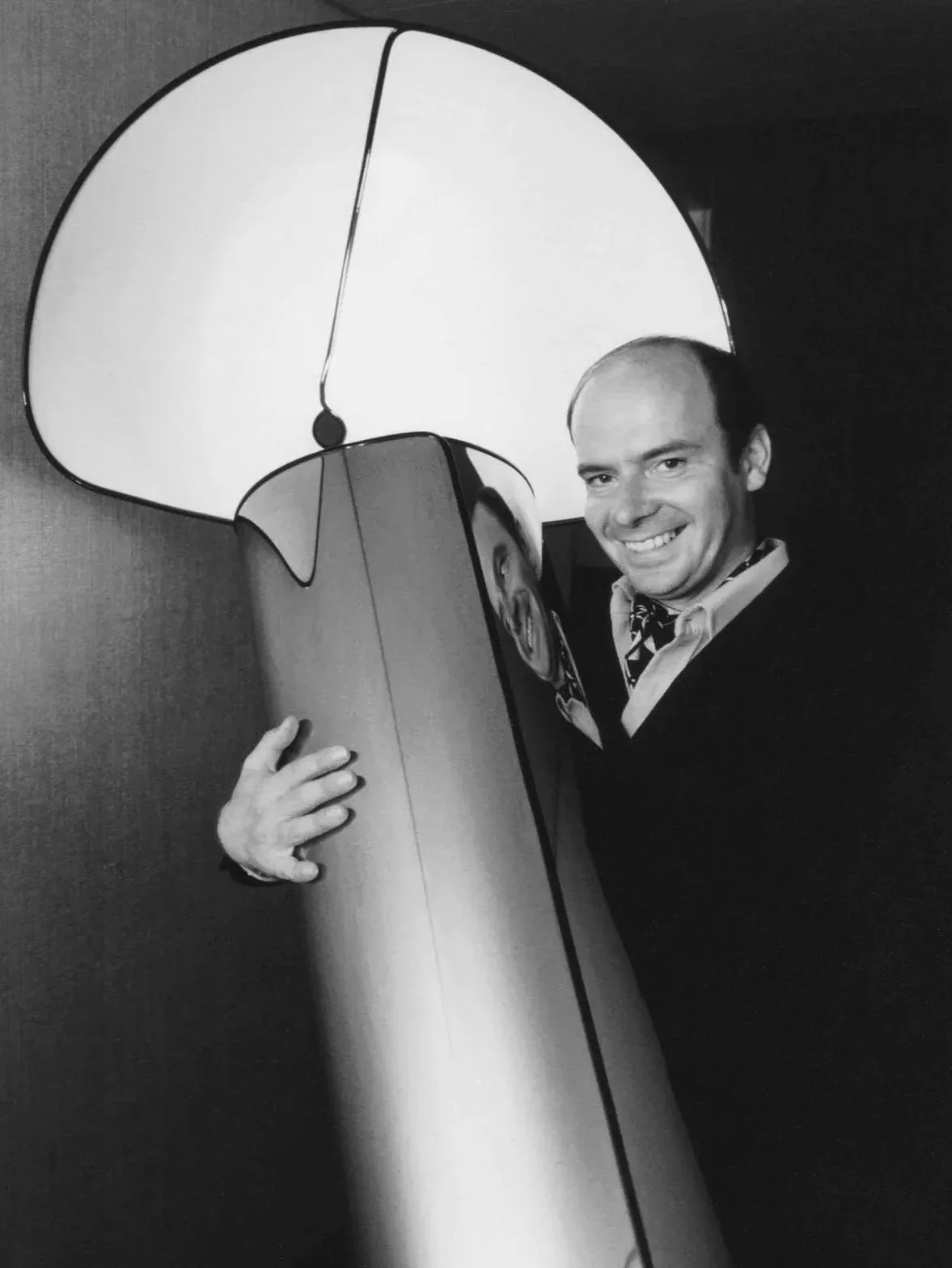
Mario Bellini
Mario Bellini is one of the defining figures of postwar Italian design — an architect and industrial designer whose furniture shaped how an entire generation thought about upholstered form, and who went on to build museums, airports and corporate headquarters across four continents. Born in Milan in 1935, he graduated in architecture from the Politecnico di Milano in 1959 and, within a few years, had become chief design consultant to Olivetti, the office-equipment company whose calculators and typewriters he would go on to redesign for nearly three decades — work that made him as significant a figure in product design as in furniture.
His furniture designs from the 1960s and 70s remain his most widely recognised work: the Amanta modular sofa for B&B Italia (1966), the Le Bambole sofa (1972), and — his best-known design — the Cab chair for Cassina, which uses a minimal internal frame entirely wrapped in a fitted leather skin, a construction principle he returned to across several later pieces, including the Piccola Tentazione chair. The Cab has sold more than 400,000 units since going into production in 1977 and sits in the permanent collections of both MoMA and the Metropolitan Museum of Art.
From the 1980s, Bellini shifted his focus almost entirely to architecture, with a body of work spanning the Villa Erba exhibition centre in Cernobbio, the Tokyo Design Centre, the National Gallery of Victoria in Melbourne, the Department of Islamic Art at the Louvre, and Milan's convention centre — the largest in Europe. He edited Domus magazine from 1985 to 1991, has won the Compasso d'Oro eight times, and MoMA holds twenty-five of his works in its permanent collection, having dedicated a solo retrospective to him in 1987. He continues to practise from Milan; a Bellini-designed extension to the city's Pinacoteca di Brera opened to the public in December 2024.