

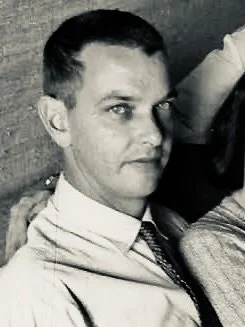
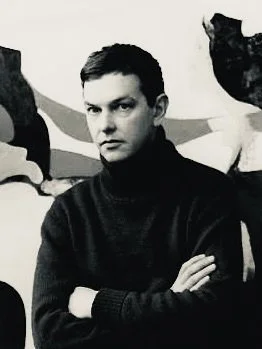
Carlo Hauner & Martin Eisler
Carlo Hauner and Martin Eisler arrived in Brazil from opposite directions and for very different reasons, and together built one of the country's defining mid-century furniture houses. Hauner, born in Brescia, Italy, in 1927 and trained at Milan's Accademia di Brera, moved to São Paulo in 1948 after exhibiting at the Venice Biennale — part of a wave of postwar Italian emigration to Brazil. Eisler, born in Vienna in 1913 and trained as an architect, fled Austria in 1938 following the Nazi annexation, settling first in Buenos Aires, where he worked as an architect, set designer, and interior designer before relocating to Brazil in the early 1950s.
Hauner arrived first and moved fastest: shortly after settling in São Paulo, he purchased a furniture factory from the architect Lina Bo Bardi and her husband Pietro Maria Bardi, renaming the operation Móveis Artesanal. Eisler and Hauner met in 1953, when Eisler — commissioned to design furniture for his brother-in-law Ernesto Wolf's home — needed a manufacturer. With Wolf's financial backing, the two opened Galeria Artesanal as a São Paulo storefront for the business, and in 1955 restructured the company under a new name: Forma. It went on to become one of Brazil's most significant furniture houses, known for slender tubular steel frames, Brazilian hardwoods like jacarandá and caviúna, and pieces designed to be structurally light without sacrificing comfort — the Concha ("shell") and Costela ("rib") chairs among the results. Forma later secured the license to distribute Knoll furniture in Brazil, bringing designs by Mies van der Rohe, Charles Eames, and Harry Bertoia into the local market alongside its own output.
The partnership was relatively brief: Hauner returned to Italy in 1958 to open a branch of Forma in Brescia, leaving Eisler to run the Brazilian operation as artistic director. Eisler continued designing and leading Forma until his death in 1977, after which the company did not survive him long. Hauner, for his part, moved into a quieter second act — working as a freelance designer for several European companies before eventually settling in Salina, Sicily, to focus on painting and winemaking.