

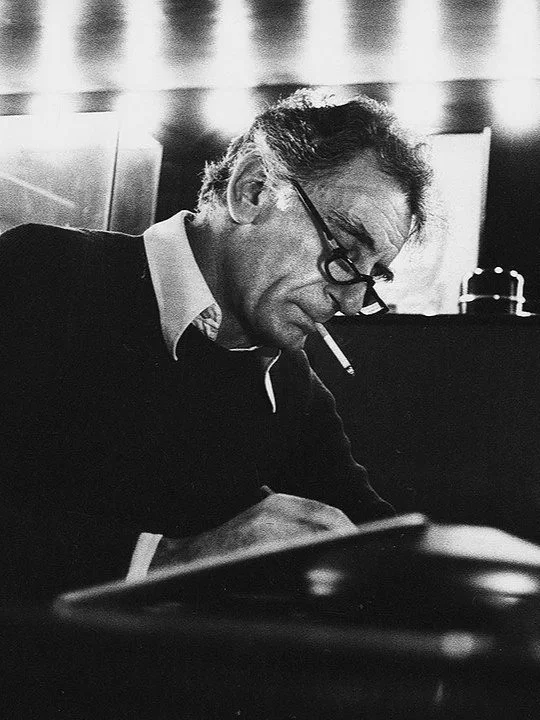
Gianfranco Frattini
Gianfranco Frattini (1926–2004) belonged to the generation of architects and designers who built the Italian design movement of the late 1950s and 60s from the ground up — trained in Milan, mentored by Gio Ponti, and shaped by the belief that furniture, lighting, and interiors were a single continuous discipline rather than separate crafts. Born in Padua, Frattini studied architecture at the Politecnico di Milano, graduating in 1953, and worked in Ponti's studio before opening his own Milan practice. It was Ponti who introduced him to Cesare Cassina, and from 1954 Frattini began a collaboration with Cassina that would run for decades and produce some of his most recognised furniture, including the Mod. 849 chair (1956).
Frattini came to industrial design somewhat by necessity — by his own account, he began designing furniture and lighting because he couldn't find pieces suited to the interiors he was building. That practical instinct stayed with him: he worked across an unusually wide range of manufacturers over his career, including Bernini, Poltrona Frau, Artemide, Knoll, Arteluce, and Acerbis, and formed a long working partnership with the Milanese cabinetmaker Pierluigi Ghianda, developing a body of work grounded in wood craftsmanship as much as industrial production.
His best-known design is the Boalum lamp (1970), created with Livio Castiglioni for Artemide — a flexible, tube-shaped light source, made of translucent PVC, that could be coiled and reshaped by the user. It remains in production today and is held in major design museum collections. Frattini was a co-founder of ADI (Associazione per il Disegno Industriale) in 1956 and later served on the board of the Triennale di Milano.