

Celina Decorações
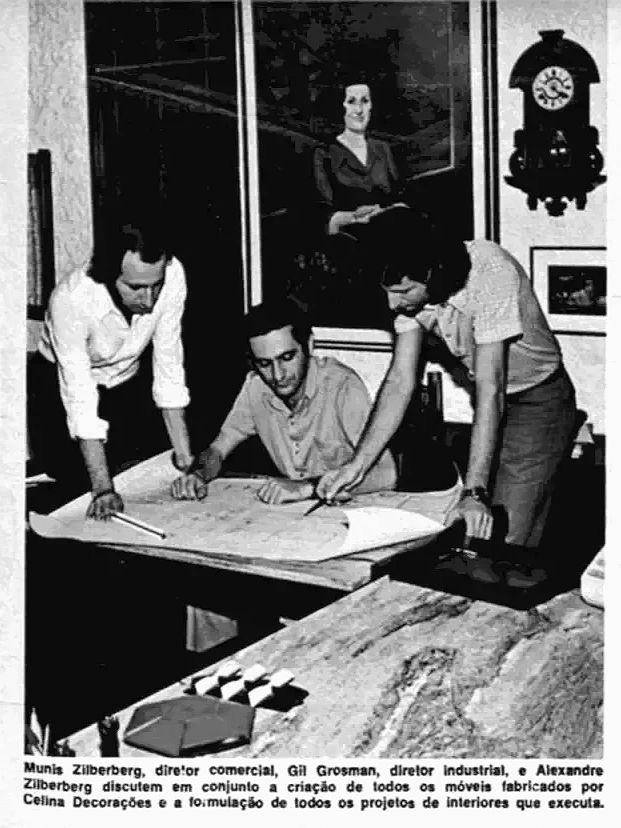
Celina Decorações began in Rio de Janeiro in 1938 as a small family upholstery workshop run by Celina Zilberberg. In 1951, her son Munis Zilberberg took over the business and transformed it entirely, renaming it in his mother's honour and repositioning it as a modern furniture house with its own original designs. Munis is credited with pioneering the concept of "interior architecture" in the Brazilian market — presenting furniture not as individual pieces but as complete, styled room settings, a genuinely new way of selling modern living to a Brazilian public still becoming acquainted with it.
Working chiefly in solid rosewood and veneers, Celina Decorações balanced industrial-scale production with real artisanal craftsmanship, avoiding the trap of choosing one over the other. Munis used mass media directly to build the brand's reputation, writing for the magazine A Cigarra to offer interior design advice and showcase Celina's settings to a wide readership — an unusually direct, editorial route to market for a Brazilian furniture manufacturer of the period. By the 1960s the company had built a network of stores across multiple Brazilian capitals, and by the 1970s it was exporting to the US and Europe and furnishing hotel and hospitality interiors alongside residential work.
Celina Decorações remained active into the 1980s, and its output — solid, functional, unmistakably tropical modernist forms in rosewood — is now recognised as central to how Brazilian modern design reached far beyond the small circle of ateliers producing it by hand.